
Archive for the ‘Career Clusters’ Category

Announcing Dr. Dean Folkers as Deputy Executive Director of NASDCTEc/NCTEF to Help Lead Charge for CTE

Thursday, August 26th, 2010

Folkers Head Shot1We are pleased to announce Dr. Dean Folkers has joined our staff as new Deputy Executive Director. For the first time in our history, the National Career Technical Education Foundation will have its own director, signifying recognition of our growth and development as an organization within the career technical education community. “We believe that our organization is at a turning point and the creation of this new position is central to the advancement of our new vision and the adoption of the Career Clusters as the standard model for all of CTE,” said Kimberly Green, National Association of State Directors of Career Technical Education Consortium (NASDCTEc)  Executive Director.

 Dr. Folkers joins NASDCTEc during a crucial time, as the organization leads a refreshed agenda for career technical education (CTE), which aims to be a rigorous academic system that also trains students for the jobs of tomorrow. To achieve its vision for CTE, NASDCTEc has adopted the National Career Clusters model as the official framework of all CTE programs. The comprehensive Career Clusters model provides students with a strong pipeline from high school to college and to career. Dr. Folkers will be charged with spearheading the National Career Clusters Initiative, a model intended to prepare all students for college and career.

Dr. Folkers comes to the organization with more than 20 years of CTE experience. Beginning as a high school agricultural education instructor and local FFA Advisor at Lakeview High School, Columbus, Nebraska, Dr. Folkers went on to serve in different leadership roles within the National FFA Organization. In his most recent position as the Assistant State Career and Technical Education Director for the Nebraska Department of Education, Dr. Folkers was involved with the creation and implementation of the Nebraska Career Education model that incorporated the States’ Career Clusters framework in supporting the development of college and career readiness among Nebraska’s students.  

We look forward to working with Dr. Folkers in his exciting new role. “I hope to capitalize on my previous experiences with career technical education to help me take NCTEF’s vision and the Career Clusters framework to the next level, by encouraging people to adopt and implement the framework,” Dr. Folkers said. Please join us in welcoming Dr. Folkers. He can be reached at dfolkers@careertech.org.

Career Clusters Integral Focus of Killeen ISD New Career Academy Planning

Thursday, August 26th, 2010

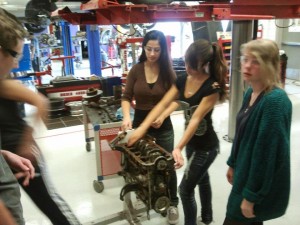
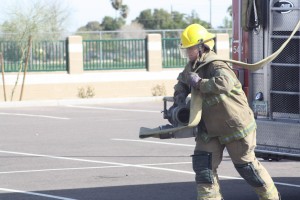
The Killeen Independent School District plans to open a new Career Academy fall 2010, which will include courses in health science, information technology and arts, audio/visual technology and communications, agriculture, food and natural resources, fire academy, cosmetology, welding, construction and automotive technology. With input from area colleges and universities and local employers, school district leaders were able this summer to lay out the planned academic framework for the school, which will cover 143,000 square feet. The new Academy is being built at a good time, as local high schools are growing, with one school above capacity—rezoning will gradually level the enrollment levels and the Academy will ease capacity issues in the district. According to Todd Martin of the Killeen ISD Public Information Office, many of the courses will satisfy core subject graduation requirements. More information

Workforce3 One Webinar will share Allied Health Access Guidebook, Promising Practices and Resources

Thursday, July 15th, 2010

Webinar invitation from Workforce3One: AHA! Allied Health Access: How to Develop Programs for Youth in Allied Health Careers

The Health Science Career Cluster has multiple pathways to student success. This webinar will introduce the Allied Health Access Guidebook to the youth program planners and service providers. The Guidebook provides practical information about allied health occupations in order to create or expand programs and services leading to allied health opportunities.  The webinar will also introduce some promising practices from the field and resources to assist in local area program development.

Presenters:

Lisa Salazar, Director, City of Los Angeles Community Development Department
Alice Cole, Director, Youth Career Development Services Division, Mayor’s Office of Employment Development, Baltimore, MD
Nancy Dischinat, Executive Director, Lehigh Valley Workforce Investment Board, Inc., Lehigh Valley, PA

Moderator:

Sara Hastings, Workforce Development Analyst, Division of Youth Services, Employment and Training Administration

Date:

07/21/2010

Time:

2 p.m. Eastern

Length:

One hour

Description:
The health care industry as a whole – and especially the allied health care sector – has great promise for employing youth and young adults. Occupations in the allied health care field are not only in hospitals and doctors’ offices. There are growing numbers of positions needed in long-term care facilities, rural and urban health care centers and clinics, specialty facilities in rehabilitation therapies, firms providing administrative services to insurance companies, medical and dental practices, and many more.

Register Now
Registration for this webinar is limited and on a first-come, first-served basis. Multiple people in one physical location are encouraged to register under one name and attend jointly. Registration link: http://www.workforce3one.org/view/5001018351572800108/info

Institute Report Out: Closing General Session Highlights Employer Needs

Thursday, July 1st, 2010
TimTaylor

Tim Taylor, Colorado Succeeds

We closed out the 8th annual Career Clusters Institute with a panel discussion lead by Tim Taylor, President of Colorado Succeeds, a coalition of business leaders who focus on education and workforce policy. He explained to the audience that the business community is excited about career pathways because they provide the “why” to students who question the relevance and importance of high school and postsecondary. The panel included Gary Barbosa, Lockheed Martin; Elaine Gantz Berman, Colorado State Board of Education; and Tom Currigan, Kaiser Permanente. Expanding on Mr. Taylor’s point about relevancy, Mr. Barbosa of Lockheed Martin stated that businesses should be part of enticing students to their industries and should be developing talent rather than just being the consumer of talent. He suggested that businesses should offer programs such as internships for teachers as a way to help them teach relevant skills in the classroom.

Ms. Gantz Berman said that Colorado just revised their state education standards to focus more on workforce readiness and 21st century skills, with a big emphasis on CTE.  They are also working on assessments that will be able to test these areas. She was also passionate about the need to get Career Clusters into all of our high schools – to “mainstream it” as she said. But she was not sure how to accomplish this.

Finally, Mr. Currigan of Kaiser Permanente emphasized the need for a skilled workforce. When a company considers moving to region, the first thing they look at is whether there are skilled workers there. In order to keep the workforce in tune with the times, he said each Career Cluster must be continually refreshed to keep up with the changes and new demands from industry. But more important than the specific technical skills required by the job, employers want workers who are able to navigate complexity and who understand connections – skills that the foundational Career Clusters Knowledge and Skills statements help students master.

Institute Report Out: Postsecondary and Industry Offer Perspective on Developing a Program of Study

Monday, June 28th, 2010

ECO icon

On July 15th, the National Career Clusters Institute presented a panel of postsecondary and industry representatives as part of the Green-Focused Program of Study Series. In order to develop an effective program of study, secondary, postsecondary and industry have to collaborate. These panelists are from exemplary teams who are working on the development of a program of study through the Green-Focused Program of Study Technical Assistance Academy grant. During this session, they responded to attendees questions and offered their insights.

Todd Sanders:  Instructor – Mechanical Engineering, Portland Community College, Ohio

John Steiner: Curriculum Specialist: Allied Health and Sciences, Salem Community College, New Jersey

Jerrold Hutton: Dean, Hocking College Energy Institute, Ohio

Krisann Rehbein: Manager of Community Partnerships, Chicago Architecture Foundation, Illinois

Q&A with Postsecondary:

How do we get components from postsecondary programs into secondary programs?

  • Use curriculum revision as an opportunity for collaboration. Get the faculty together and lay the curriculum out on the table in order to start to see potential crossover. Meet consistently to establish a working relationship.

Do you have any tips about working on dual credit?

  • Don’t forget about general education components, they are just as beneficial and are often easier to build into dual credit because they tend to be very similar at secondary and postsecondary levels.

Classes often close out quickly at community colleges. How can we get more high school students into community college classes?

  • Offer flexible scheduling and more classes at different hours.
  • Also look for online learning opportunities.

Q&A with Industry:

How do we engage industry more with internships and apprenticeships?

  • Have a student do the outreach. Give employers an opportunity to connect with a student from the very beginning.

Industry moves so fast, how can education keep up?

  • Software and technology will change all the time. The Internet offers a platform for continued learning online via tutorials, etc. But what about the basic, essential skills? In architecture and construction, for example, how do you learn context, like where to place a building? What are the green/environmental components? Connection to industry is not necessarily through cutting-edge specific skills, but rather a solid understanding of what you are doing and why. With this base, you can develop additional skills over time.

Have industry advisory committees or national organizations played a critical role?

  • Most guidance comes directly from industry in order to keep students up with what [architecture] firms are doing locally because they move at their own pace.

Institute Report Out: Adams County Education Consortium Provides Students with Multiple Career-Planning Opportunities

Friday, June 25th, 2010

Institute Report Out: Individual Career and Academic Plans: Multiple Years of Exploration under the Cluster Umbrella
Presented by Sandra Steiner, Executive Director, Adams County Education Consortium

Designing relevance in academic instruction and providing students with age- and experience- appropriate access to employers ensures better post-secondary and workforce readiness. This presentation focused on proven middle and high school programs of the Adams County Education Consortium that enhance career development of all students and engage area employers.

Programs highlighted included:

Adams County Commissioners’ Career Expo

The Adams County Commissioners’ Career Expo is a unique, one-of-a-kind career fair designed to get 8th grade youth thinking about their future education and career goals. This annual event is particularly remarkable since it is designed to accommodate the total county 8th grade population and introduce them to professionals in their selected industry choices. Guidelines for preparing a student Career Expo

Backpacks to Briefcases

Backpacks to Briefcases is a free sit down dinner and training session for Adams County high school graduating seniors. The first annual event took place February 10, 2010 and included 140 seniors and 42 professional table host/sponsors. This event was designed to help students make the transition from the high school classroom to the world work and/or higher education by providing information on how to best handle themselves in business/professional settings. More

Experience 9 to 5

This is a multi industry career exploration program that is offered over several dates in the fall. The multiple night programs will allow students the chance to dig deeper into an industry of choice.  Students will get hands-on opportunities to “try out” the job and learn more about what is required to be successful. More

Institute Report Out: Taking on the Necessary Challenges of Developing a Model Program of Study

Friday, June 25th, 2010

ECO iconTeam representatives from Illinois, New Jersey, Georgia, Oregon and Ohio came together at the Career Clusters Institute last week to share how they met challenges to developing a green-focused program of study. As winners of the Green-Focused Program of Study Technical Assistance Academy, they are pioneers in this endeavor and offer a unique learning opportunity to all who work within an established program of study or are in the process of developing one. Through the challenges they have faced so far, the challenges they anticipate in the future and what they might have done differently, you can find insights into how to take on what is most difficult in developing a model program of study.

Faced Challenges:

  • Each state had to put together a team of secondary, postsecondary, and business and industry members. While all states were impressed by the enthusiasm they were met with, it was challenging to develop a team this diverse with full participation and collaboration. To meet this challenge, many initially began working to establish a shared language and understanding. For example, a community college understood “program of study” to mean “major”. Working together, the team had to lay a foundation of common meaning.
  • Understanding what a program of study is in practice, not just on paper. Illinois is developing a tool that will specify evidence necessary for a program of study.
  • Establishing a strong industry connection. While several states already have strong connections between business and industry and community colleges, they are continuously working to extend these connections to the secondary level. By bringing all respective stakeholders to the table to contribute to the development of the program of study, they are developing a shared language and increasing opportunities to work together.

Anticipated Challenges:

  • Some states lack statewide articulation agreement policies. For now, work with individual colleges will keep progress moving forward and provide examples to inform a potential statewide agreement.
  • Implementation of teaching and learning. Where professional development is not centralized, work needs to be done to leverage it for these programs of study.
  • In some cases with “green”, there is enthusiasm, but no programs. Program development has begun, but in many cases control is at the secondary level. The postsecondary institutions have to adopt the content to continue that program.

What would you have done differently?

  • Three states indicated they tried to address too many areas and that a narrower focus might have helped move along their progress. However, one state did say that the trying to address so many areas served a purpose. While they do not have green-focused programs of study developed in three different cluster areas, they have broadened their audience, which will potentially help them in the future.
  • Two states said they would have broadened the initial team participation. Eight to ten people was not enough for the kind of diverse participation and buy-in they needed.

Common Core Standards: Opportunities Rise for CTE

Thursday, June 24th, 2010

As the education community dissects the details of the recently-released Common Core State Standards, leaders of the initiative remind the education community that these standards do not address all of what students need to be college and career ready. In fact, career technical education (CTE) has its own distinct role to play in outlining the career skills that students should acquire to achieve readiness, said Gene Wilhoit, Council of Chief State School Officers Executive Director and a leader in the standards movement.

At a NASDCTEc webinar just days before the Common Core released its math and language arts standards this month, Wilhoit said “these are academic standards that need to be mastered by a CTE or college student. They are essential but not necessarily sufficient…..they are not everything that a student would need.” He added that CTE has a “tremendous opportunity” to step forward and fill in the gaps of the nation’s college and career ready agenda. The Common Core Standards allow room for curriculum that integrates rigorous academic standards with relevant career training, Wilhoit said.

Further, he noted the significant advantages a CTE student would have in an obtaining an educational experience that was aligned to core academic standards and enhanced by a career-focused curriculum. He added that CTE programs that provide students access to earn credentials or certifications would certainly put students at a greater advantage in the competitive workplace.

Wilhoit’s statement should put to ease the concerns some over what impact the Common Core may have on CTE’s approach to college and career readiness. In a previous blog, we noted comments of Dane Linn, Education Division Director of the NGA Center for Best Practices, who said that the Common Core Initiative had CTE specifically in mind when adding exemplars of technical writing and technical manuals in their common core document.

NASDCTEc is working to identify how the Common Core aligns with the Career Clusters Knowledge and Skills Statements, which will begin a re-validation process this fall. A designated committee will assess the Knowledge and Skills Statements, which identify the core career and academic competencies a student needs, and implement any relevant alignment with the Common Core initiative. Further, the Knowledge and Skills Statements will also have to be recalibrated to reflect NASDCTEc’s new vision, which calls for all students to be college and career ready.

Institute Report Out: North Carolina Career Clusters Guide

Thursday, June 24th, 2010

The North Carolina Career Clusters Guide was shared by:
Felicia Gray-Watson , Section Chief, CTE Support Services, lead speaker
North Carolina Department of Public Instruction

The North Carolina Department of Public Instruction and the North Carolina Community College System collaboratively developed a career clusters resource for counselors to implement career clusters. Using the North Carolina Career Clusters Guide, counselors are able to assist students identify career options, educational goals, and make plans for success. This helpful guide includes “Discover Your Career Personality,” an interest inventory designed to provide focus and direction for future planning. (Note: the guide is a very large file, and will need additional time to download)

Institute Report Out: Green-Focused Program of Study Series Shares Successes and Challenges to Developing a Model Program of Study

Friday, June 18th, 2010

The 8th Annual Career Clusters Institute showcased a special series this past week: the Green-Focused Program of Study Technical Assistance Academy. One year ago, fives states were awarded technical assistance to develop a model program of study with a “green” focus. Team representatives from Illinois, New Jersey, Georgia, Oregon and Ohio convened in Denver to share their story with Institute attendees.

Each state had an opportunity to report out individually, as well as participate in two panels: one that focused specifically on the postsecondary and industry perspective and another that particularly addressed the barriers and challenges to developing a program of study.

Although these five states differ in their education systems and in their “green” focus (architecture and construction versus energy, for example), they share similar struggles. Next week we will share a more in-depth look at challenges raised by the teams at the Institute, including the following:

  • Understanding what a program of study is, beyond what it should be. What does it actually look like?
  • Identifying true labor demands. A program of study must be relevant to local industry. How do we determine what is most needed, good wage and enduring?
  • Collaborating between secondary and postsecondary. A program of study is impossible without high schools and higher education participating equally. How do we build the necessary bridge to get both institutions to work together as a unified team?